Do I Need to Go Through Security Again if Going From Iad Terminal a to Terminal C
SSH or Secure Shell in simple terms is a fashion by which a person can remotely access another user on other system but only in command line i.e. not-GUI way. In more than technical terms, when we ssh on to other user on some other system and run commands on that machine, it actually creates a pseudo-final and attaches it to the login vanquish of the user logged in.
When nosotros log out of the session or the session times out after being idle for quite some time, the SIGHUP signal is ship to the pseudo-terminal and all the jobs that have been run on that terminal, even the jobs that have their parent jobs existence initiated on the pseudo-terminal are too sent the SIGHUP signal and are forced to terminate.
Don't Miss: 5 Useful Practices to Proceed SSH Server Secure and Protected
Only the jobs that have been configured to ignore this bespeak are the ones that survive the session termination. On Linux systems, we can take many ways to make these jobs running on the remote server or whatsoever motorcar fifty-fifty later user logout and session termination.
Understand Processes on Linux
Normal Process
Normal processes are those which have life bridge of a session. They are started during the session every bit foreground processes and finish upwards in certain fourth dimension span or when the session gets logged out. These processes accept their possessor equally any of the valid user of the system, including root.
Orphan Process
Orphan processes are those which initially had a parent which created the process but afterward some time, the parent procedure unintentionally died or crashed, making init to be the parent of that process. Such processes have init as their firsthand parent which waits on these processes until they die or end up.
Daemon Process
These are some intentionally orphaned processes, such processes which are intentionally left running on the arrangement are termed as daemon or intentionally orphaned processes. They are unremarkably long-running processes which are in one case initiated and and then detached from any decision-making concluding so that they can run in groundwork till they do non get completed, or stop up throwing an error. Parent of such processes intentionally dies making child execute in background.
Techniques to Continue SSH Session Running Later Disconnection
At that place can exist various ways to leave ssh sessions running after disconnection as described below:
1. Using screen Command to Proceed SSH Sessions Running
screen is a text Window Manager for Linux which allows user to manage multiple terminal sessions at same time, switching betwixt sessions, session logging for the running sessions on screen, and even resuming the session at any time we desire without worrying about the session existence logged out or terminal being closed.
screen sessions tin can be started and then detached from the controlling terminal leaving them running in background so be resumed at any fourth dimension and fifty-fifty at whatsoever place. Just yous need to kickoff your session on the screen and when y'all want, detach it from pseudo-concluding (or the controlling terminal) and logout. When you feel, y'all can re-login and resume the session.
Starting a screen Session
Afterwards typing 'screen' control, you lot volition be in a new screen session, within this session you can create new windows, traverse between windows, lock the screen, and practise many more stuff which yous tin can do on a normal concluding.
$ screen
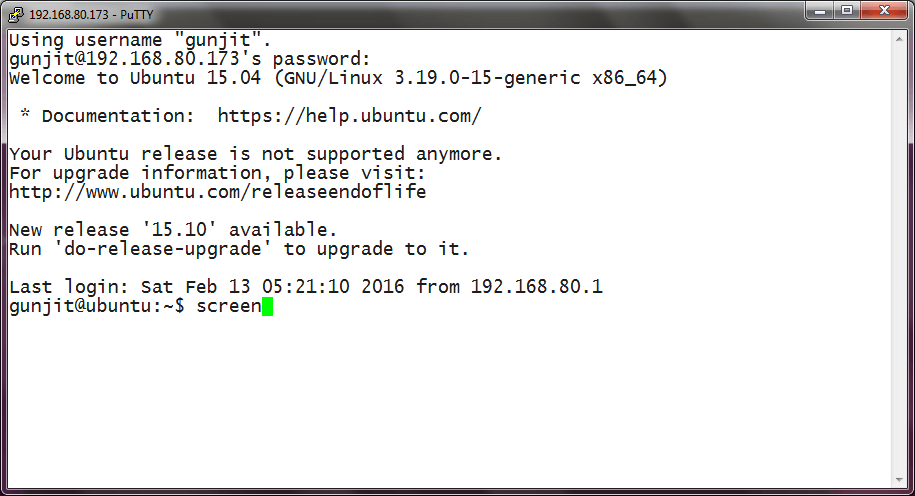
Once screen session started, you lot can run any control and keep the session running by detaching the session.
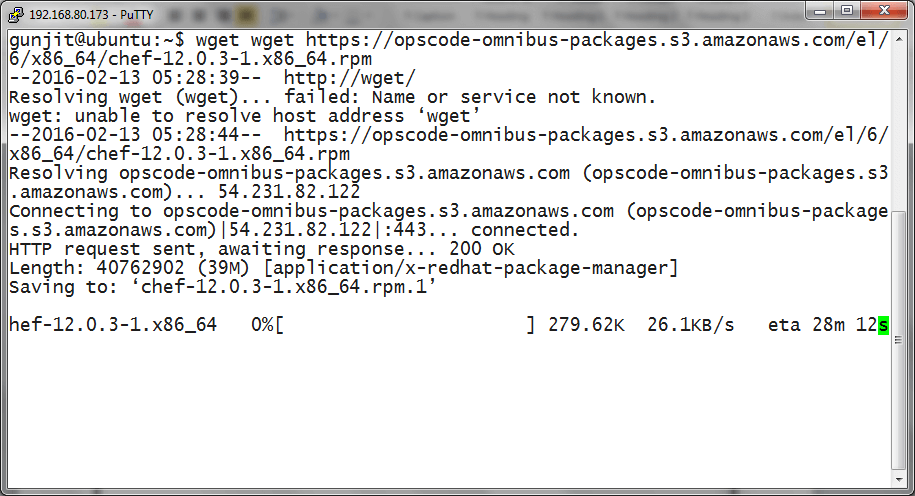
Detaching a Screen
Only when yous want to log out of the remote session, only y'all desire to proceed the session you created on that auto alive, and then merely what y'all need to do is detach the screen from the terminal so that information technology has no controlling concluding left. After doing this, you can safely logout.
To disassemble a screen from the remote final, but press "Ctrl+a" immediately followed by "d" and you lot volition be dorsum to the terminal seeing the message that the Screen is detached. Now you lot can safely logout and your session will exist left alive.

Resuming Detached Screen Session
If you want to Resume a detached screen session which y'all left before logging out, but re-login to remote final once more and type "screen -r" in case if simply one screen is opened, and if multiple screen sessions are opened run "screen -r <pid.tty.host>".
$ screen -r $ screen -r <pid.tty.host>
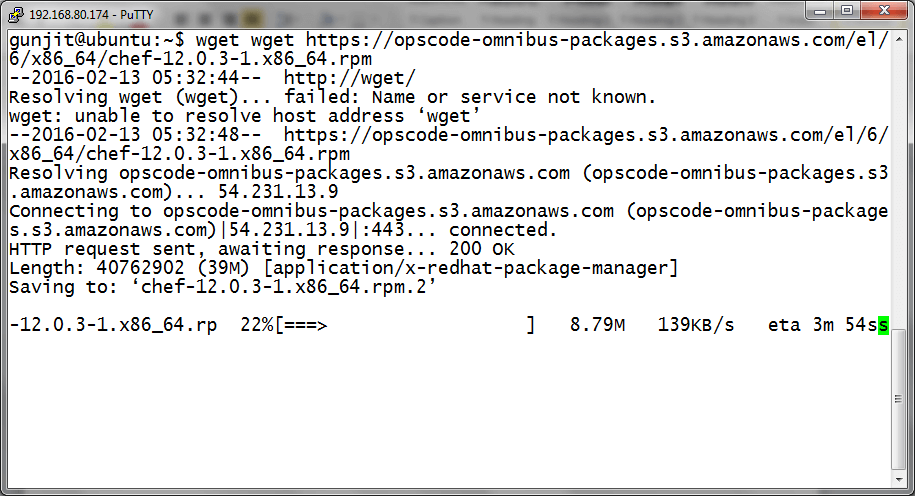
To Learn more almost screen control and how to use information technology only follow the link: Apply screen Control to Manage Linux Terminal Sessions
two. Using Tmux (Terminal Multiplexer) to Go along SSH Sessions Running
Tmux is another software which is created to exist a replacement for screen. It has nigh of the capabilities of screen, with few boosted capabilities which make information technology more powerful than screen.
It allows, apart from all options offered by screen, splitting panes horizontally or vertically between multiple windows, resizing window panes, session activity monitoring, scripting using command line fashion etc. Due to these features of tmux, information technology has been enjoying broad adoption by nearly all Unix distributions and fifty-fifty it has been included in the base of operations arrangement of OpenBSD.
Starting time a Tmux Session
After doing ssh on the remote host and typing tmux, y'all volition enter into a new session with a new window opening in front of you, wherein you tin do anything yous do on a normal concluding.
$ tmux
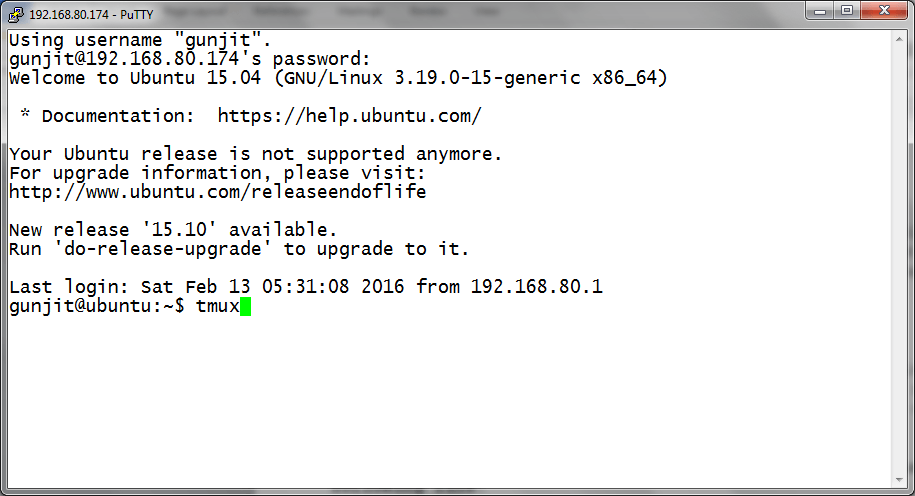
After performing your operations on the terminal, you can detach that session from the controlling terminal then that information technology goes into background and you can safely logout.
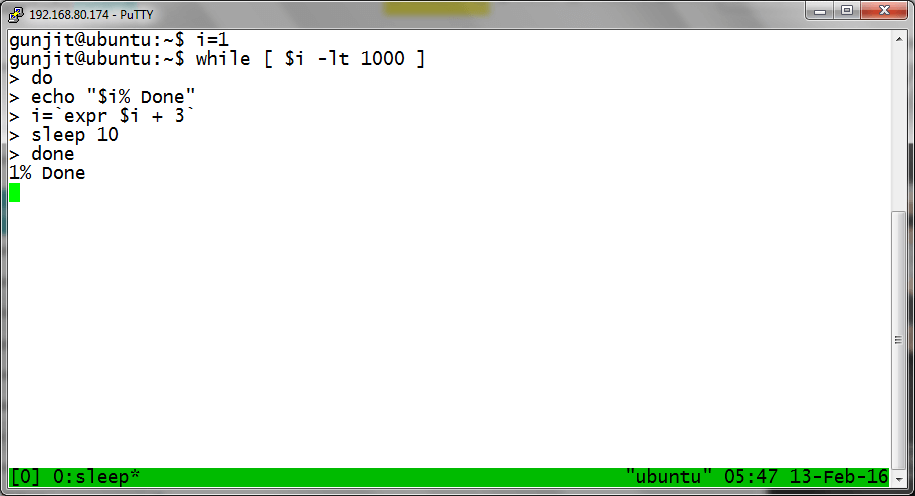
Detach Tmux Session from Concluding
Either yous can run "tmux detach" on running tmux session or you can use the shortcut (Ctrl+b and then d). After this your current session volition be detached and yous will come back to your terminal from where you can log out safely.
$ tmux disassemble
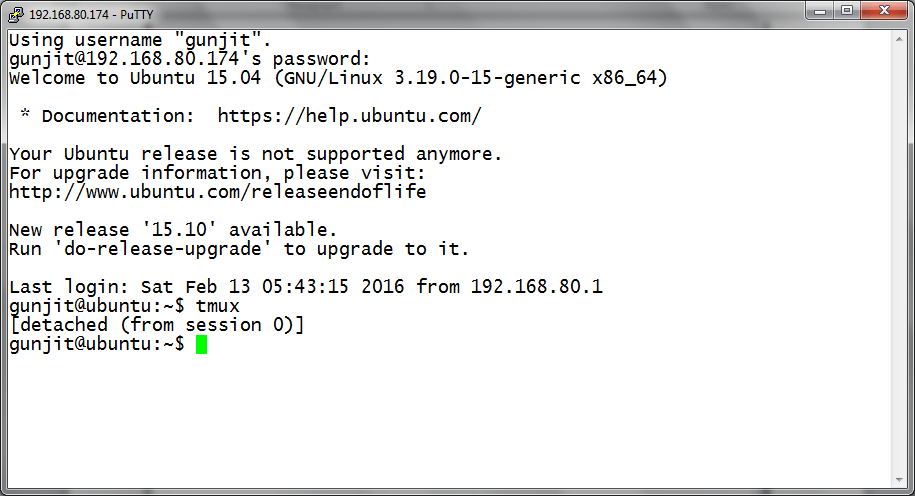
Resuming the Airtight Tmux Session
To re-open the session which y'all discrete and left as is when yous logged out of the organization, just re-login to the remote auto and type "tmux adhere" to reattach to the closed session and it will be still exist there and running.
$ tmux attach
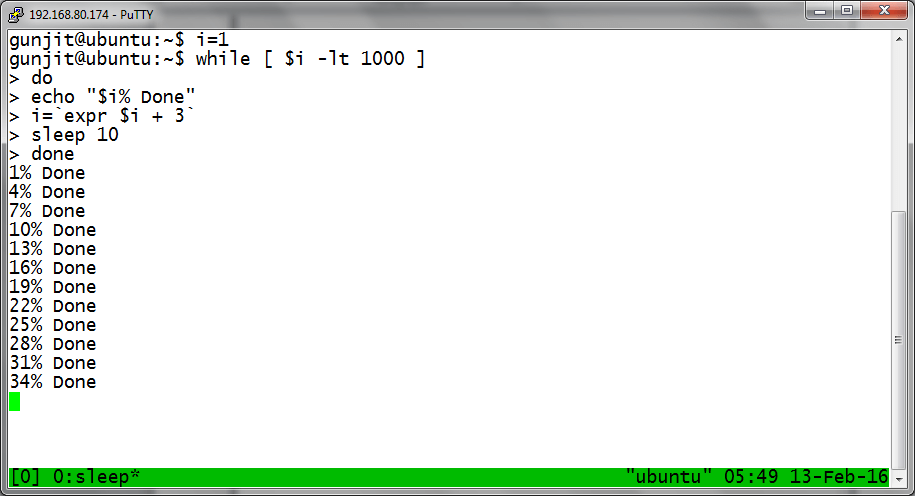
To Learn more than about tmux and how to apply information technology just follow the link: Use Tmux Last Multiplexer to Manage Multiple Linux Terminals.
three. Using nohup command to Keep Running SSH Sessions
If you are not that familiar with screen or tmux, you tin use nohup and send your long running control to background so that you can continue while the command will keep on executing in groundwork. Later that you tin can safely log out.
With nohup command nosotros tell the process to ignore the SIGHUP indicate which is sent by ssh session on termination, thus making the command persist even after session logout. On session logout the command is detched from decision-making terminal and keeps on running in background as daemon procedure.
Executing command using nohup in groundwork
Here, is a simple scenario wherein, we accept run notice command to search for files in background on ssh session using nohup, afterward which the task was sent to background with prompt returning immediately giving PID and task ID of the process ([JOBID] PID).
# nohup find / -blazon f $gt; files_in_system.out 2>one &
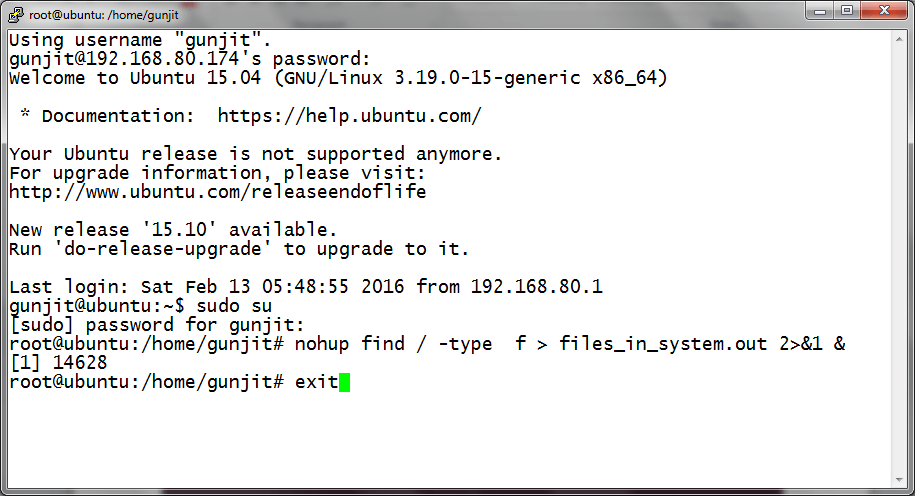
Resuming the session to view if chore is yet running
When you re-login again, yous can cheque the condition of command, bring it back to foreground using 'fg %JOBID' to monitor its progress and and so on. Below, the output shows that the job was completed every bit it doesn't prove on re-login, and has given the output which is displayed.
# fg %JOBID
4. Using disown Command to Keep SSH Sessions Running
Another elegant way of letting your command or a single task run in background and remain live fifty-fifty after session logout or disconnection is by using disown.
Disown, removes the job from the process task listing of the system, then the process is shielded from being killed during session disconnection every bit it won't receive SIGHUP by the crush when you logout.
Disadvantage of this method is that, it should be used only for the jobs that do not need any input from the stdin and neither need to write to stdout, unless you specifically redirect jobs input and output, considering when task will attempt to collaborate with stdin or stdout, information technology volition halt.
Executing command using disown in background
Below, nosotros sent ping command to background so that ut keeps on running and gets removed from job list. As seen, the job was showtime suspended, afterwards which it was still in the job list as Procedure ID: 15368.
$ ping tecmint.com > pingout & $ jobs -50 $ disown -h %1 $ ps -ef | grep ping
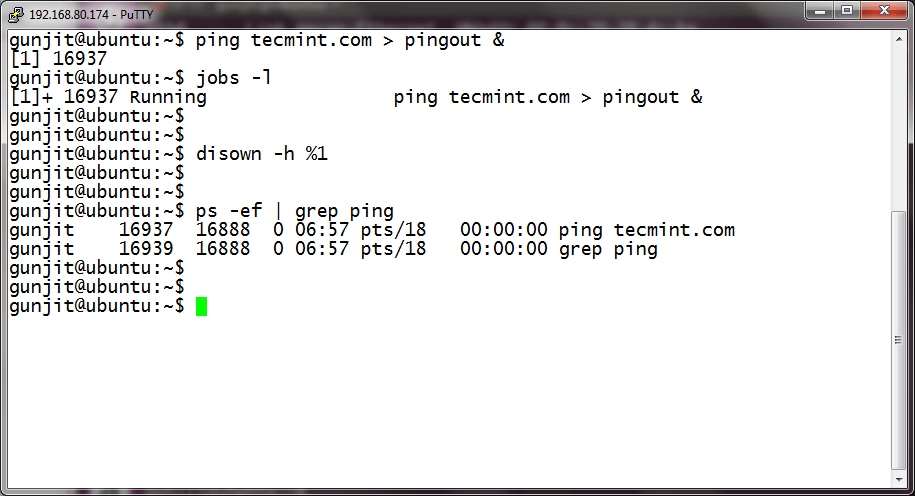
Afterwards that disown betoken was passed to the job, and it was removed from chore listing, though was notwithstanding running in background. The job would still be running when yous would re-login to the remote server as seen below.
$ ps -ef | grep ping
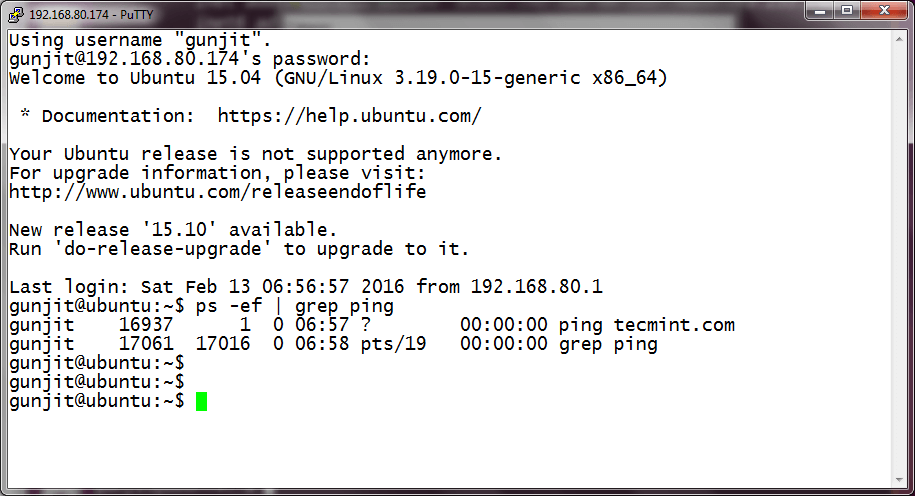
5. Using setsid Command to Put SSH Sessions Running
Some other utility to achieve the required behavior is setsid. Nohup has a disadvantage in the sense that the process group of the procedure remains the same so the procedure running with nohup is vulnerable to whatever indicate sent to the whole process group (like Ctrl + C).
setsid on other hand allocates a new procedure grouping to the process existence executed and hence, the process created is totally in a newly allocated process group and can execute safely without fear of being killed even after session logout.
Execute any command using setsid
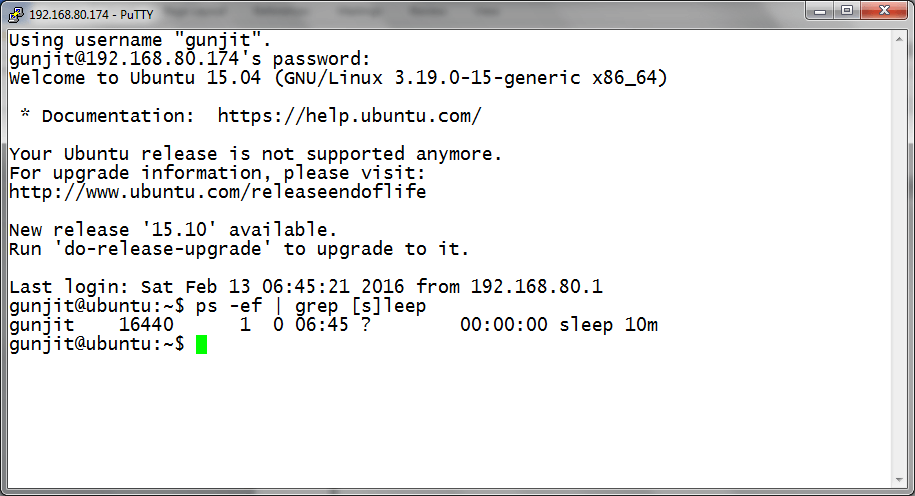
Hither, it shows that the process 'sleep 10m' has been detached from the controlling concluding, since the time information technology has been created.
$ setsid sleep 10m $ ps -ef | grep sleep
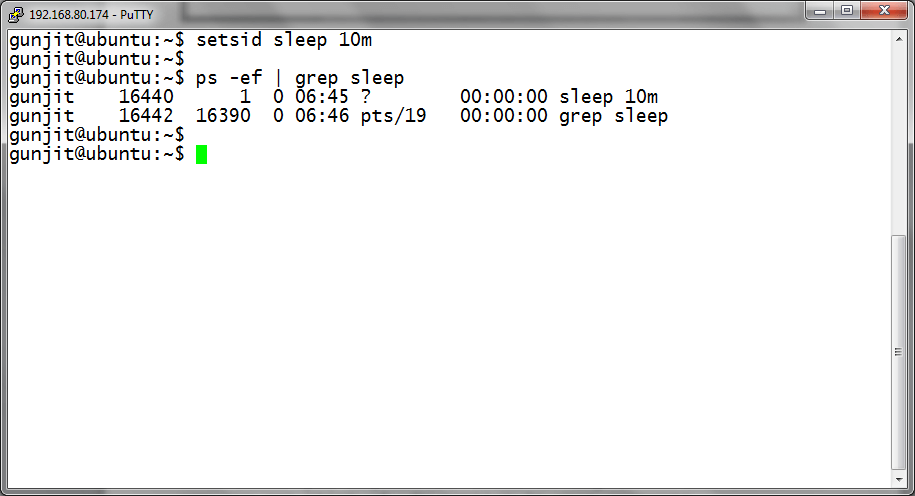
Now, when you would re-login the session, y'all volition all the same find this process running.
$ ps -ef | grep [s]leep
Conclusion
What ways yous could think of to continue your procedure running even after you logout from SSH session? If there is any other and efficient way y'all can think of, exercise mention in your comments.
Source: https://www.tecmint.com/keep-remote-ssh-sessions-running-after-disconnection/
0 Response to "Do I Need to Go Through Security Again if Going From Iad Terminal a to Terminal C"
Post a Comment